Theoretical underpinnings
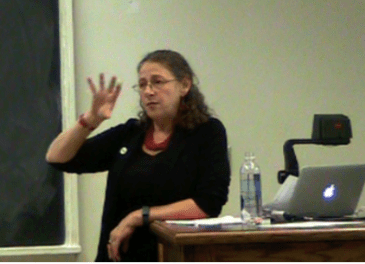
It is because I fell in love with teaching that I became an academic. Because what made me fall in love with teaching was a student who learned to use the comma, I became a writing teacher. That simple! Thanks to that student and many others who challenged me to teach them, I realized I needed to know more about literacy, writing, and the teaching of writing. I have been privileged to work with some wonderful teachers on that quest. I came to graduate school in the US (from England) to study contemporary American literature, and I did that. But I also studied literary and critical theory under the wise and demanding eye of William Spanos at SUNY Binghamton. And I studied composition. Composition theory. Rhetorical theory. Discourse analysis.  Pedagogy. I was lucky enough to work with Constance Coiner, from whom I learned how (and why) to combine the study of reading, pedagogy, and social justice issues in my teaching and scholarship, modeled in her work with Radical Teacher. I want to know how to teach people to write fluently, accurately, correctly, creatively, and powerfully and to develop ways to work with them as they develop the writing skills they need to realize their full potential. I want my students to enjoy writing and to learn how to make ideas their own and use writing to articulate them. But I also still love literature and reading and my scholarly work always in some ways combines reading, writing, and theory. In my most recent research I am exploring ways to teach the same kind of ownership and enjoyment of reading and source-based writing and how to incorporate generative AI into that process.
Regularly Taught Courses
DSEM 100 – Personal Responsibility, Civic Duty, Social Need: The Complexities of Civic Engagement (every Fall since Fall 2016). I have the privilege of teaching one of the Drew Seminars for students in Drew’s Action Scholars Program. The course, with a little tinkering, was designed by the original Director of the Center for Civic Engagement, Amy Koritz, and is packed full of fascinating and challenging readings that push the students — and me — to think more deeply about this thing called civic engagement. The seminar includes volunteer placements for students, so I also get to learn about the groups with which Drew has partnered, and as academic advisor to the Action Scholars in my class, I get to know each Civic class and often also work with sophomore Civic Scholars as Writing Fellows.
ENGH 346 – “Blogs, Tweets, & Social Media: The Art of Digital Communication” (Fall semesters). This course has evolved a great deal since I first taught it in Spring 2013, just as the internet itself has evolved, and I keep “Tweets” in the title to remind us of that fact. What remains constant is that it is an advanced writing course designed for senior majors in English, Writing & Communication Studies, Media Studies, Business, and Marketing. Students learn to use WordPress and to harness rhetorical techniques in the creation of a personal website and blog, and as part of the curation of their personal “brand” across digital media platforms. Through peer review by “(re)branding Teams” they work on their writing, delivery, and design skills as they prepare to make their words public, learning how to evaluate the work of other writers and web designers in the process define what a “well written” digital text or blog post looks like. They also theorize the role of digital communication and our responses to it, and analyze how the audience/purpose/genre triad comes to life when we apply it to social media writing. ”
In planning this class I ask the following: What challenges face writers of the “digital age”? What is the role of colleges like Drew as we prepare our graduates for their new writing lives? What do these students need to learn that will help them draw together all they have already learned in their college writing classes and re-purpose it to help them live, work, and write in their post-college lives? Most recently I am exploring what role Generative AI plays in that, both in the classroom and in the workplace. How does the audience/purpose/genre triad come to life when we apply it to social media writing? And is any of this really new at all?
[It made the news back in 2013: “Four New Courses You Wish You’d Taken!“]
WRTG 220 – “Writing for Wikipedia: Sources, Sentences, & Style (Spring semesters). This course invites students to engage in public writing and to perfect their writing and information literacy skills while they do so. As part of the project to increase the accuracy and diversity of Wikipedia entries, the nonprofit WikiEdu is partnering with colleges and universities around the world and inviting students to become editors. Wikipedia provides training to students as they learn best practices of public writing— from accuracy to avoiding plagiarism. Students enrolled in this class will work with Wikipedia editors and the Drew library to identify topics and select sources they can use to help them write or revise Wikipedia entries. This is also a writing intensive course, so both the professor and Writing Fellow, and the Wikipedia editors provide feedback on draft entries, allowing students to perfect their writing skills and learn to target their writing to a real audience. Skills emphasized in this course are summary and paraphrase writing, and editing for clarity, brevity, and sentence structure.
ENGH 349 / WRWT 549 – Writing Fellows Practicum: Theory and Practice. (Fall and Spring semesters). This course can be taken for 0-4 credits with variable amounts of reading and writing based on credit hours, and is designed for course-embedded writing fellows (who must register for a section in the semester they serve as Writing Fellows), and anyone who has been a Fellow or writing tutor and would like to think further about the role of writing, teaching, and learning. The course is designed to introduce students to the theory and pedagogy of writing and tutoring and peer-to-peer mentoring, with a focus on writing in various disciplines and genres. Topics include the writing process, audience, and purpose; language acquisition and writing-based learning disabilities; writing in a non-native language; multimodal writing; collaborative writing; revision and editing; and discipline-specific discourse and practices, such as citation. Discussion focuses on the role of the course-embedded writing Fellow, including issues of authority, expertise, facilitated peer review, and working one-on-one. The course combines readings and discussion with a practicum that allows students to directly engage and interrogate the ideas and pedagogies they encounter. A significant portion of the course involves working directly with writers from a variety of disciplines. [ENGH 349 is a pre-requisite for WRWT 549 and also for undergraduates who wish to register for the Graduate Certificate in Teaching Writing.]
ENGH 240 – “Introduction to Writing and Communications Studies.“ (Every Spring semester). I first taught this course in Fall 2014 and am still rearranging and tweaking it although I think I have a sense of how to connect all of the parts–finally. This course introduces students to the related fields of Writing Studies and Communication Studies. At the heart of each is the study of language and the complex ways we shape and are shaped by the written and spoken word. From the personal to the professional, written and spoken texts are driven by the message the author/speaker wishes to send, the needs and expectations of the audience being addressed, and the genre and medium selected for that message. From roots in classical rhetoric and the creative arts to current uses in civic and professional realms, written and spoken communication moves, inspires, persuades, entertains, connects, and sometimes alienates us. This course studies the history, theory, and practical applications of writing and communication from social media to civic engagement, and from the arts to professions as diverse as advertising, journalism, public relations, and the law. We will also consider the politics of literacy, the impact of global Englishes, stylistic debates, and the ways technologies have changed writing and communication. Come back to see out final project: “Seven Things Parents Should Never Do When Texting College Students”
Course description
ARTT 701 – “Teaching in the Two-Year College” (every third semester). I am honored once again to team-teach this graduate course with Philip Chase, Associate Professor of English at the County College of Morris (CCM). Our challenge: design a course to prepare future two-year college teachers. Community colleges are growing, and hiring. But faculty trained to teach at research universities are often ill-equipped for the community college–and too few actually set out to teach at two-year colleges. Of course, many of the best two-year college teachers traveled that route, but what would it have helped them to have learned in graduate school? How might they be better prepared to serve this growing population of students and really advance the project of democratic access set out by the President? This course is part of a two semester teaching practicum. The semester after taking this course, students may be selected to shadow community college faculty at CCM, learning from these mentors and sharing ideas in what is ideally a two-way faculty development experience.
ARWR 549 – Advanced Writing Fellows Practicum.
Previous classes
ENGL 399/SPAN 399 – “A Tale of Two Cities: Havana, Cuba and “Little Havana,” Miami – Drew ShortTREC program to Cuba (May 2017; January 2016). A travel writing course that spans two locations: “Little Havana” in Miami and Havana, Cuba – two cities linked by history and politics. We will explore the history that links these two cites, the politics of that relationship, the changing relationship between the US and Cuba over the last year, and the economic and cultural implications of all of this. A range of lectures, excursions, organized activities, and free time in the two locations allow students to compare the two cities, enriching their understanding of the countries and of geo-political relations in general. And they write about the experiences in writer’s journal entries and formal travel essays. Check out the blog at the course website.
ENGL 214 – “Theory and Practice of Tutoring Writing“ (Spring 2016; Fall 2013). I am team-teaching this course with Dr. Jami Barnett, Director of the Center for Writing Excellence at Drew. The course is designed to introduce students to peer-to-peer writing tutoring both in the Writing Center and as Writing Fellows. Eventually we plan to have two separate courses, one for Writing Center Tutors and one for Writing Fellows, with the latter including work on information literacy and more specifically tailored to the Van Houten Writing Across the Curriculum Fellows. For now it is wonderful to work with Maya again as we explore readings and strategies with a group of intelligent, caring, and really insightful students and see writing through their eyes. I am learning so much more that they are!
ENGL 388 – Theories and Effects of Media Communication (Spring 2015). Taught in New York City two days a week, this course introduced students to the critical perspectives, theories, and research methods that are central to the analysis of mass communication policy and programming, traditional and new media, interpersonal communication, and audience reception. Students explored the history and ethical dimensions of the principles and practices integral to media, publishing, and communications, and developed the skills they need to explain how and why media institutions make messages, how individuals receive and use these messages, and what cultural, social, individual, and global impacts those messages have.
ENGL 389 – New York Semester on Communications and Media Colloquium (Spring 2015). Taught in New York City two days a week, this course provides an immersion into the institutions and operations of communications and media, their roles in contemporary society, emerging trends, and the impact of technical innovation. Central to this colloquium are lectures and panel discussions by guest speakers drawn from the fields of advertising, communications, public relations, publishing, and media. The class visits those speakers in advertising agencies, public relations firms, digital and traditional media organizations, publishers, nonprofit organizations, and various locations around Manhattan.
“Creative Nonfiction: News Feature & Article Writing“ (Spring 2014). In Spring I revisited a creative nonfiction course I hadn’t taught for years, but which I taught every year for my first decade at Drew: Article Writing. This is one of the staples of the nonfiction track of our Creative Writing Minor (Drew’s most popular minor!!), which has most recently been and continues to be taught by a series of wonderful and prolific writers on an adjunct basis. I’ve been teaching another version of the form “travel writing” as a hybrid memoir/article course, but now I’m back to the pure form with a standard catalogue description that I pretty much need to follow. But a lot has changed in the last ten years and I am excited to incorporate online genres into the mix and consider if/how there are different rules at play when one writes for the screen instead of the page. We started by reading and exploring D’Agata and Fingal’s Lifespan of a Fact because we always struggle with the role of the word “creative” and what makes an article not just a wikipedia entry. I considered assigning one of the CNF textbooks on the market, but they all seem to focus on the personal essay these days or just try to cover everything, and that is not what this course is about. Very frustrating. I ended up gathering together some of my favorite examples of each genre and making a reading packet, and then using genre descriptions from the same book I used back in the early 1990s–long out of print. What’s up with that?
Course description
ENGL 399/SPAN 399 – “A Tale of Two Cities: Havana, Cuba and “Little Havana,” Miami – Drew ShortTREC program to Cuba (May 2017; January 2016). A travel writing course that spans two locations: “Little Havana” in Miami and Havana, Cuba – two cities linked by history and politics. We will explore the history that links these two cites, the politics of that relationship, the changing relationship between the US and Cuba over the last year, and the economic and cultural implications of all of this. A range of lectures, excursions, organized activities, and free time in the two locations allow students to compare the two cities, enriching their understanding of the countries and of geo-political relations in general. And they write about the experiences in writer’s journal entries and formal travel essays. Check out the blog at the course website.
Drew International Seminar: Immigration and Identity in Argentina (January 2008). Here is the blog my students created during the on-site component of the course. If I can find it I will add a link to the pre-departure course as well.
Drew International Seminar: Identity and Ethnicity in Argentina (January 2007). The first trip–no pictures in this one though.
Identity and Ethnicity in Puerto Rico and Cuba
Introduction to Digital Humanities. Drew Summer College. Website and syllabus, 2019
 Sandra Jamieson